
The first agentic holiday season:
A post-purchase checklist for Black Friday and Cyber Monday 2026
This is the first Black Friday where AI agents can check out on a shopper's behalf. Here's why post-purchase is what will decide who wins it, and a checklist to get ready before November 27.
This is the first Black Friday where AI agents can check out on a shopper's behalf. Here's why post-purchase is what will decide who wins it, and a checklist to get ready before November 27.
Black Friday is November 27. For a lot of brands, it will be the first one where some of the orders are placed by an AI agent instead of a person.
I know, I know. We've heard "this is the year of mobile," "the year of social commerce" and "the year of chat" pretty much every November for a decade (or two). But this one really is different. Or at the very least, it's the last holiday season retailers get to prepare for before our robot overlords take over the checkout for good next year.
Personal Agents are here just in time for the holidays
AI assisted commerce is not a prediction anymore...
In the last few months Meta launched Muse, OpenAI launched Dots and xAI launched Grok Bot, all personal agents that keep working on a person's behalf in the background. McKinsey already points to "tools like Muse and Alexa for Shopping gaining traction," Shop Pay now works inside Muse, Claude Duet and Instinct, and Grok Bot will check out from brands that aren't even on Shopify. (If you're already losing track of which assistant is which, so is your support team.)
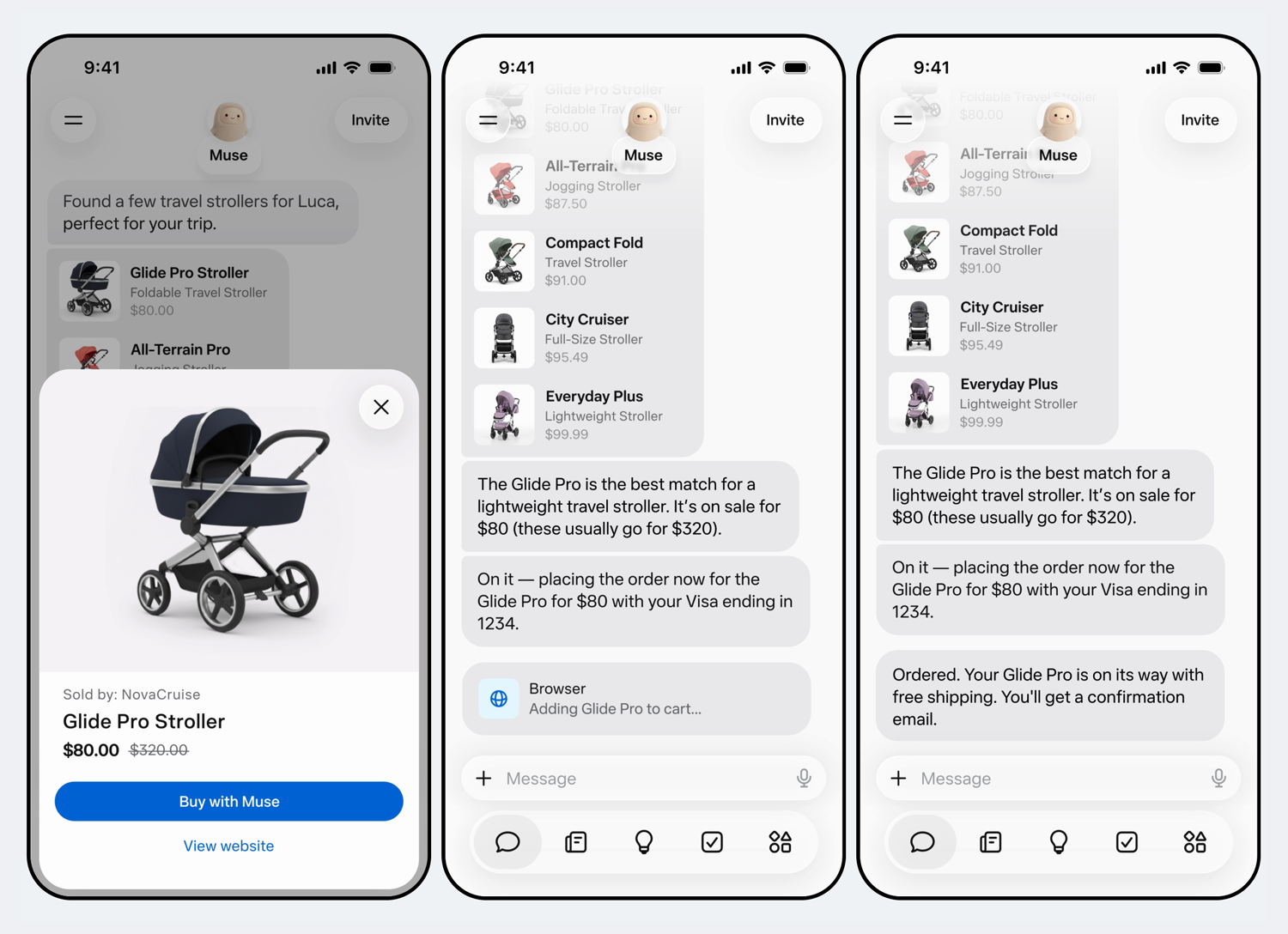
Now let's get down to business.
Google's Universal Cart lets shoppers check out across retailers like Nike, Sephora, Target, Ulta Beauty, Walmart and Wayfair in Search and the Gemini app. Salesforce merchants can turn on agent checkout on Google. Shopify opened its catalog and checkout to agents in its Fall '26 Edition. McKinsey puts the timing plainly: retailers are "opening their doors to agents in a secure, controlled, and standards-based way as the 2026 holiday season approaches."
And Commerce.com and Cloudflare turned on WebMCP across almost 100,000 BigCommerce storefront domains!
The forecasts agree:
- Traffic from AI is surging. Adobe expects AI traffic to US retail sites to grow 130% year over year this season, with the biggest jumps on Thanksgiving (159%) and Black Friday (95%), per Digital Commerce 360. Adobe forecasts $275.1 billion in US online sales for November and December.
- Agents are becoming a channel. Salesforce predicts "20% of all holiday ecommerce traffic in 2026 will originate from AI chat agents," and that "one in three ecommerce sites will have a site-specific shopper agent live by Cyber Week 2026," according to its 2026 Holiday Predictions report.
- The season is big either way. The NRF forecasts November and December retail sales will grow 4.2%, to $1.013 trillion.
Agents will get you the sale. What happens next decides whether you get the next one.
Last year's Cyber Week was the preview
Salesforce has been the loudest about agents in retail. (Renaming your whole business after agents does feel a little like compensating for something. But who's measuring? As long as it's super, it must be intelligent - right?)
Still, its own data from last season shows where this is heading. In its Cyber Week 2025 results, AI and agents drove $67 billion in sales and "influenced a staggering 20% of all global orders." Retailers using their own branded agents, including Pandora, SharkNinja and Funko, "saw sales grow 32% faster than those without."
The part that matters most for this post came after the sale. "Agentic customer service conversations grew 55% week over week," and agent actions like updating delivery addresses and starting returns rose 70% over the week before. Agentforce Service handled more than 4.2 billion case interactions through the post-purchase surge.
This year Salesforce is going further. Its Agentforce Commerce Shopper Agent "carries the customer conversation from discovery through checkout and into service," and Salesforce says it "resolves a service issue because order management is native." Its October release added UCP-powered checkout on Google. And Nitin Mangtani, who runs Agentforce Commerce, makes a bet worth noting next to Google's and Shopify's multi-brand carts: "commerce itself will happen predominantly on owned and operated properties."
Whichever way that goes, the lesson from last year is the same. Agents don't just bring more orders. They bring more post-purchase conversations, faster, and more of them ask for an action, not just an answer.
Why post-purchase decides the season
I've said it before and I'll keep saying it: the experience after the sale is what makes a customer choose a brand, and choose it again. The holidays are where that gets tested hardest. More orders, tighter delivery windows, gifts that have to arrive on time, and a January full of returns.
This year adds three twists:
- The agent sees everything you published. Agents answer from the policies and product data a brand publishes, whether that's the Universal Commerce Protocol's
/askendpoint, a platform's knowledge base for agents or your product feeds. Your holiday return window and shipping cutoffs are now read by agents first, and quoted back exactly. - Delivery and returns are becoming a ranking signal. The platforms agents shop through are starting to reward reliable fulfillment. Shopify, for one, now ranks products with its delivery-and-returns badge higher in the catalog agents search. How well you delivered last season can decide whether an agent recommends you this one.
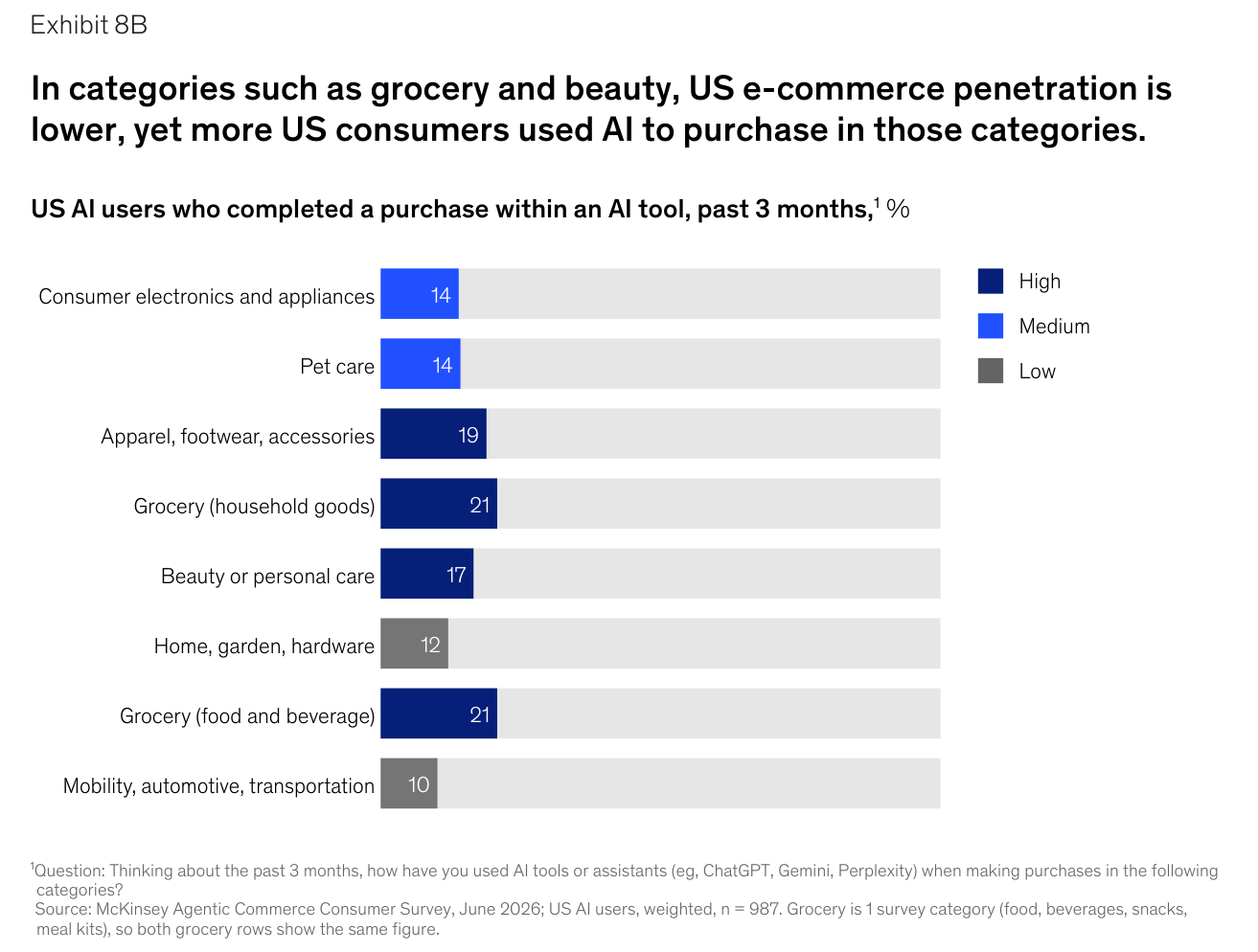
- The categories growing fastest are the hardest after the sale. McKinsey found AI purchases catching up fastest in categories like grocery and beauty, where e-commerce has always struggled with "freshness, order complexity, and difficulty of returns."
And when something goes wrong, it lands on you. Google says merchants "will remain the seller of record," and Shopify agrees: "The order is still the merchant's. The customer relationship is still the merchant's." The agent that sold it can tell a shopper where the order is. It can't fix it.
The agents' wallets are making promises too. Muse checks out with Stripe's Link, and Meta says it's "the first AI agent covered by Link's purchase protections: free coverage for damaged or lost items, price drops, no-fee returns, and a return guarantee on eligible purchases." Great for the shopper. But somebody still has to process that no-fee return, and it's not Stripe.
The checklist
Here's what we'd do before November 27.
Before Black Friday
- Know which orders came from agents. Check how agent-placed orders show up in your order system, by app, channel or tag, so your team knows what they're looking at before they reply. (They won't arrive with a little robot emoji next to them. Probably.)
- Publish your holiday policies where agents read them. Extended return windows, shipping cutoffs, gift receipts and gift returns. Check every place an agent might read them, from your platform's agent knowledge base to your product feeds, against your help center and macros. If they disagree, the agent will quote the version it found first.
- Set your holiday return exceptions now. Extended windows for gifts, rules by market, products that can't be returned. Whatever your platform and returns provider support, set it up now, not the week of.
- Decide what an outside agent may do. Tracking is an easy yes. Cancellations, address changes, exchanges and refunds need a policy before a shopper's assistant asks, plus a clear point where it goes to a person.
- Decide which AI agents can work in your help desk, too. Outside agents are coming to your side of the counter as well. On November 10, Zendesk opened early access to Zendesk Bridge, which lets external AI agents, "including Claude, ChatGPT, Microsoft Copilot, Gemini, or AI agents you build yourself," take actions in Zendesk over MCP. They start with no access, and the logs record "which external AI agent performed each action and on whose behalf." If your team plans to lean on them during the rush, pick the agents, the groups and the tools now, not on Black Friday.
During the rush
- Make "where's my order?" answerable everywhere. The shopper's agent, the platform's own assistant, your AI agent and your team should all see the same status and tracking. Carrier delays will happen. Inconsistent answers about them are what turn one question into three tickets.
- Be ready for "delivered, but it's not here." Carrier scans and delivery photos are your best evidence, and some platforms now attach them to disputes automatically. Make sure your team can see the same proof when the customer writes in.
- Give your AI agent actions, not just answers. An AI agent that can only explain the policy will hand most holiday requests to a person. One that can change the address, reship the gift or start the exchange actually takes load off the team.
- Hand off with context. When a person takes over, they should see the order, how it was placed, what the customer or their agent asked, and what was already tried.
After the holidays
- Plan for the January returns wave. Gift returns, exchanges and store credit will arrive in volume, and some of them from agents. Turns out an AI that's great at buying the perfect sweater is just as great at buying it in the wrong size.
- Measure saved orders, not deflection. An answered "where's my order?" is fine. An exchange instead of a refund, or a late order that becomes a next order, is better.
The post-purchase opportunity
Here's the part I'd underline. The holiday rush is also the best chance all year to turn support into revenue.
A late order is a great example. An AI agent that only sees the order refunds the shipping and closes the conversation. One that also sees the customer's lifetime value, loyalty tier and purchase history knows this is a customer worth keeping, and can offer something that earns the next order instead. Same delay, very different outcome.
Agents are going to make buying easier for everyone this season. The brands that win the holidays will be the ones that make everything after the purchase just as easy, because that's what makes a customer choose them again in January, and next November.
That belief is why we started agnoStack in 2019, and it's never mattered more than it does this year.
Sources
- https://www.mckinsey.com/capabilities/growth-marketing-and-sales/our-insights/who-wins-when-ai-does-the-shopping-new-evidence-on-agentic-commerce
- https://www.digitalcommerce360.com/2026/09/29/adobe-projection-2026-online-holiday-sales-275-billion/
- https://communicateonline.me/insights/ai-agents-social-commerce-predicted-to-reshape-2026-shopping/
- https://nrf.com/media-center/press-releases/nrf-forecasts-2026-holiday-sales-growth-as-consumers-remain-resilient
- https://blog.google/products-and-platforms/products/shopping/universal-cart-launch/
- https://www.salesforce.com/blog/b2c-commerce-october-26-release/
- https://www.salesforce.com/news/press-releases/2025/12/05/cyber-week-ai-agents-sales/
- https://www.salesforce.com/news/stories/agentforce-commerce-announcement/
- https://blog.cloudflare.com/webmcp-commerce/
- https://www.shopify.com/editions/fall2026
- https://www.shopify.com/news/fall-26-edition-feature
- https://www.shopify.com/news/fall-26-edition-merchant
- https://about.fb.com/news/2026/09/introducing-muse-personal-ai-agent/
- https://openai.com/index/introducing-dots/
- https://x.ai/news/introducing-grok-bot
- https://support.claude.com/en/articles/17666489-how-to-use-shop-pay-with-claude-duet
- https://support.zendesk.com/hc/en-us/articles/11485591370650-Announcing-Zendesk-Bridge
- https://support.zendesk.com/hc/en-us/articles/11398710406554